
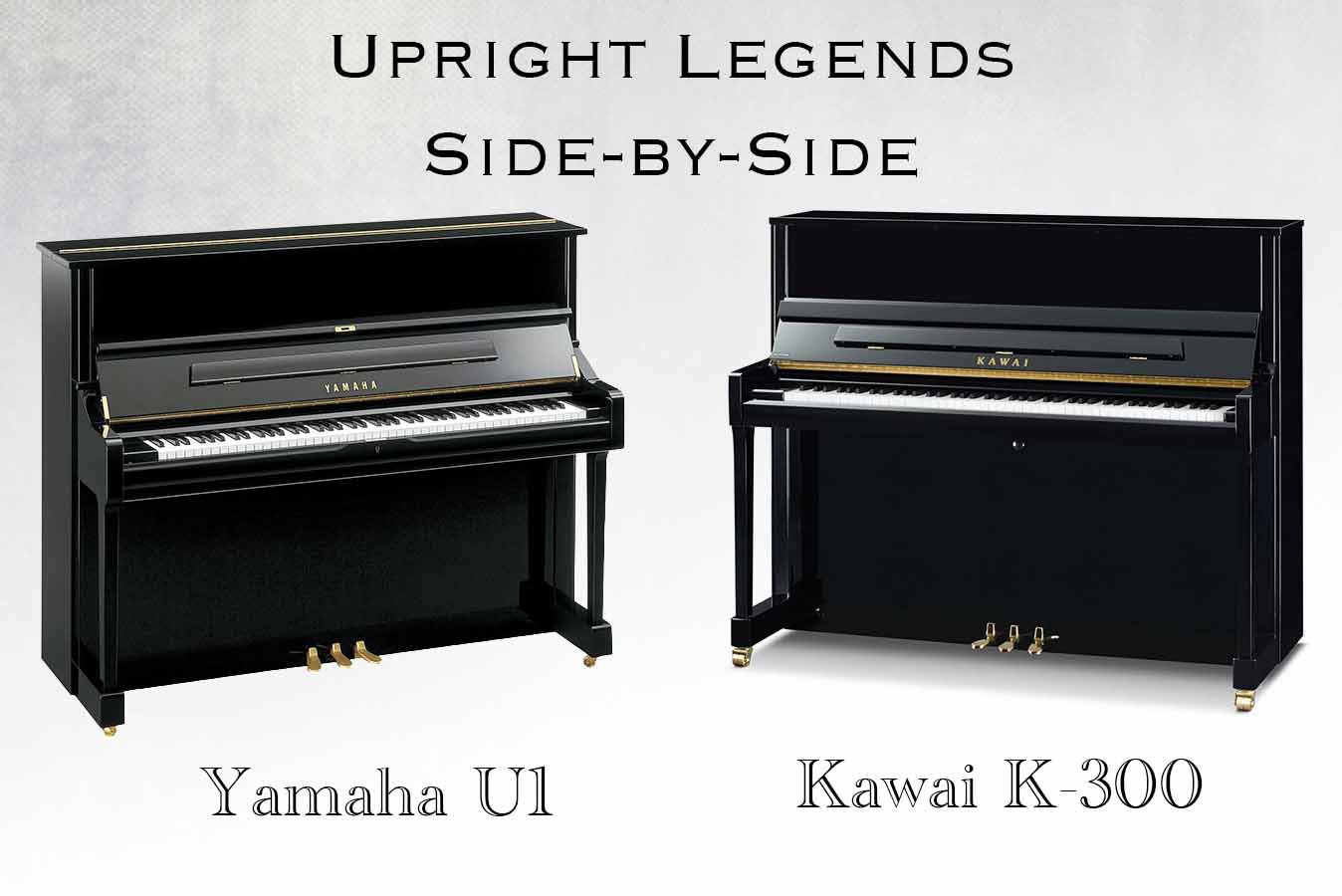
Same Country, Different DNA: Comparing Two of Japan’s Most Iconic Upright Pianos
Two stalwarts of the upright world: the Kawai K-300 and the Yamaha U1. Both are built in Japan, both stand around 48″, and both are professional-level uprights you’ll hear in schools, studios, and serious homes. But their personalities are different — and those differences matter depending on what you play, how you practice, and what you want from an instrument.
Below we compare them across the things pianists actually care about: tone, touch, action technology, musical fit, maintenance, and buying advice.
Tone & Character
-
Kawai K-300 — Warm, round, forgiving.
The K-300 tends to open with a warmer, richer midrange and a somewhat softer treble out of the box. It’s often described as “piano-forward” rather than “brilliant-forward,” which makes it flattering for a wide range of repertoire and especially pleasant for long practice sessions and lyric playing. -
Yamaha U1 — Bright, punchy, immediate.
The U1 has a clearer top end and a more forward, energetic midrange. It reads fast and projects with a percussive clarity that helps articulation cut through — great for ensemble playing, music that needs rhythmic definition, and pianists who like an immediate response.
Action & Touch
-
Kawai (Millennium III action / ABS-Carbon):
Kawai’s use of composite materials (ABS-Carbon in the Millennium III) makes the action notably stable, consistent, and durable. Many players like the smooth, controlled feel — it can feel a touch more “forgiving” when shaping long phrases. -
Yamaha (traditional wooden action design):
Yamaha actions emphasize precision and quick repetition. The U1’s action often feels slightly firmer and more immediate under the fingers, which some pianists prefer for crisp articulation and faster passagework.
Musical Fit
-
Kawai K-300: ideal for pianists who want a warm, musical instrument that flatters lyrical playing, jazz, romantic repertoire, and studio work where a rounder tone is desirable. Also great for students and teachers who prefer a stable, smooth action.
-
Yamaha U1: perfect for players who need clarity, projection, and rhythmic definition — classical repertoire with dense textures, ensemble settings, or anyone who wants an instrument that “speaks” clearly in a busy mix.
Build, Reliability & Maintenance
-
Both measure 48″ tall, are professionally built in Japan, and have excellent reputations for reliability and longevity when properly maintained.
-
Kawai’s composite action components give it resistance to humidity and dimensional change over time.
-
Yamaha’s tried-and-true wooden action and high manufacturing tolerances make the U1 easy to regulate and service at most shops.
Recording & Performance Considerations
-
Recording: Kawai’s warm midrange can be very forgiving in close miking; Yamaha’s clearer treble and punch can sit well in mixes if you want definition.
-
Small venues/home recitals: U1 tends to project a touch more, but the K-300 fills a room with a pleasing, rounded presence.
Resale & Value
-
Both models hold value well because of their reputations and worldwide dealer networks. Market factors (age, condition, provenance, cosmetic finish, and local demand) will be the deciding factors — not the model alone.
How to Choose — Practical Tips
-
Play both back-to-back (we have them here at Kim’s Piano!). Use the same repertoire (a fast passage and a lyrical etude) so you can judge tone and response fairly.
-
Listen in the room, not just at the keys. Walk around the instrument — tonal balance changes with position.
-
Test dynamics. Play pianissimo to fortissimo to see how the piano colors the sound at extremes.
-
Ask about regulation history. A well-regulated older piano can beat a poorly cared-for newer one.
-
Consider your playing style. Modern/Pop? the U1’s punchy, bright tone may suit you better. Classical? The K-300’s signature warm, rounded tone might be the better fit.
Final Thoughts
Choosing between the Kawai K-300 and the Yamaha U1 isn’t about which piano is better—it’s about which voice speaks to you. Both are impeccably designed in Japan, both offer professional reliability, and both have earned their place as industry standards. The difference lies in character.
If you value richness, smoothness, and a slightly more forgiving tonal palette, the K-300 may feel like home. If top-end clarity and projection are your priorities, the U1 is hard to beat. Either way, you’re choosing a world-class upright—one that will reward your fingers, your ears, and your music for years to come.