
How Old Is My Steinway? – How to Look Up Your Serial Number
Few names in the piano world carry the prestige and recognition of Steinway & Sons. For more than 170 years, Steinway has been considered one of the gold standards of piano craftsmanship, trusted by concert artists, universities, recording studios, and collectors around the globe.
Founded in 1853 in New York City by German immigrant Henry E. Steinway and his family, the company quickly earned a reputation for innovation and exceptional build quality. During the late 19th and early 20th centuries, Steinway developed many of the features now considered standard in modern piano design, including advancements in cast-iron plate construction, overstrung scaling, and soundboard engineering.
These innovations helped produce the rich, powerful, and deeply expressive tone that would become known as the “Steinway sound.”
Why Steinway Pianos Became So Popular
Part of Steinway’s popularity comes from its ability to combine technical precision with musical personality. Steinway pianos are known for their warm bass, singing treble, and wide dynamic range, allowing pianists to perform with both power and nuance.
The company also built strong relationships with elite musicians through its famous “Steinway Artist” program. Legendary pianists such as Sergei Rachmaninoff, Vladimir Horowitz, and Arthur Rubinstein all performed on Steinway pianos, helping establish the brand’s dominance in concert halls worldwide.
Today, Steinway remains one of the most recognizable luxury piano brands in the world, especially among serious pianists seeking handcrafted quality and concert-level performance.
Why Older Steinway Pianos Are So Desirable
One reason vintage Steinway pianos are so sought after is the legendary “Golden Era” of Steinway manufacturing, generally considered to span from roughly 1890 to 1940. During this period, many piano technicians and musicians believe Steinway produced instruments with particularly rich tonal complexity and exceptional craftsmanship.
These older pianos were heavily handcrafted, often using old-growth woods and slower production methods that emphasized detail and individuality. Many pianists describe vintage Steinways as having a warmer, more colorful, and more orchestral tone compared to some modern instruments.
As a result, restored Golden Era Steinways continue to command strong demand among collectors, performers, and piano enthusiasts.
A properly restored vintage Steinway can offer not only incredible musical performance, but also long-term value and historical significance.
How to Find the Serial Number on a Steinway Piano
If you own or are considering purchasing a Steinway piano, locating the serial number is one of the best ways to determine its age and production history.
On Steinway Grand Pianos:
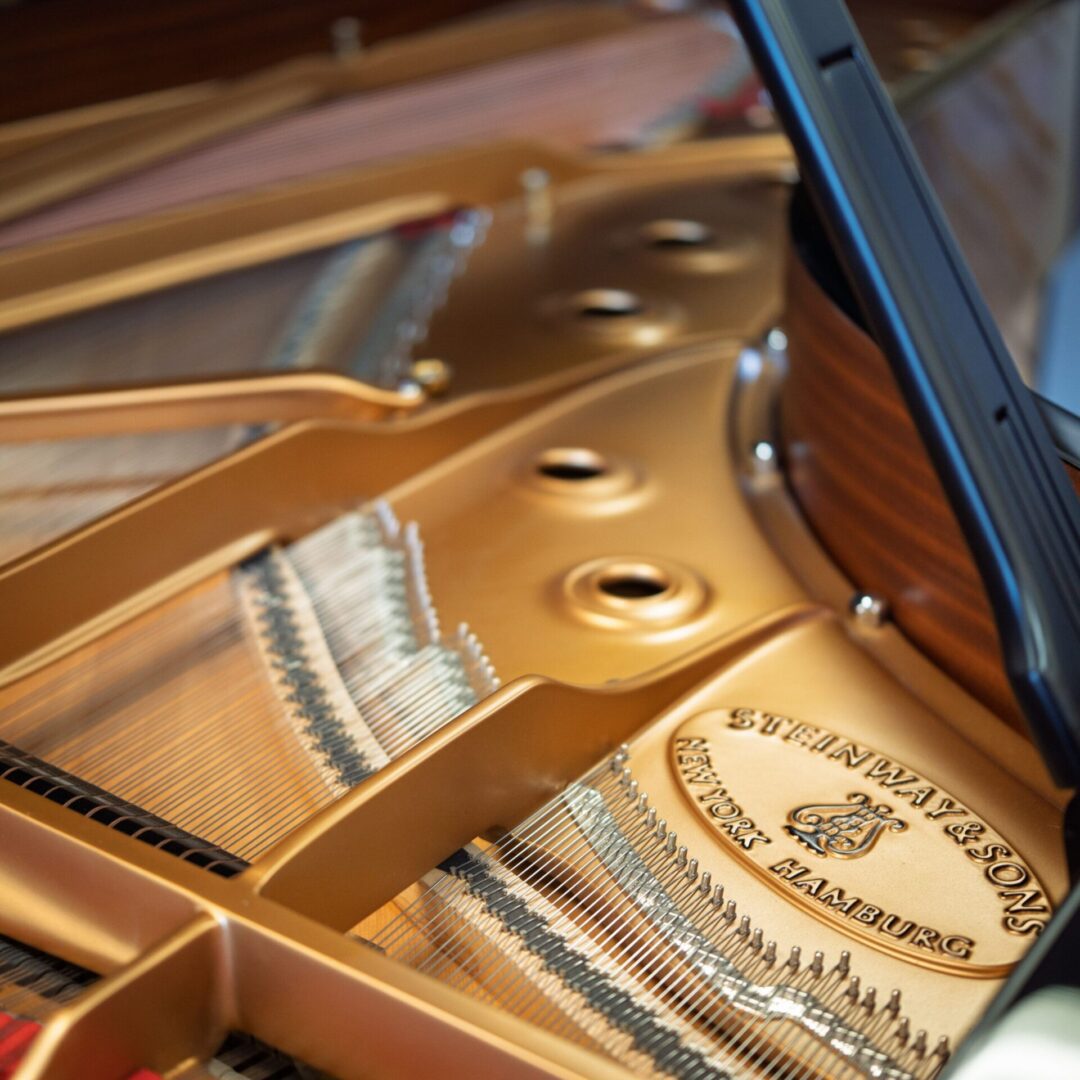
The serial number is typically found stamped into the wood or plate inside the piano near the tuning pins or soundboard area. Open the lid and look near the front section of the plate. It can also be found on the front of the action, visible if you remove the long thin wooden strip (key slip) in front of the keys
On Steinway Upright Pianos:
The serial number is usually located inside the piano near the top of the plate or soundboard. Open the top lid and look toward the upper interior frame.
Once you locate the serial number, you can compare it against Steinway serial number charts to determine the piano’s manufacturing year.
| 483 / 1853 | 165000 = 1914 | 380000 = 1963 | 592000 = 2012 |
| 1000 = 1856 | 170000 = 1915 | 385000 = 1964 | 594500 = 2013 |
| 2000 = 1858 | 175000 = 1916 | 390000 = 1965 | 597500 = 2014 |
| 3000 = 1860 | 183000 = 1917 | 395000 = 1966 | 600000 = 2015 |
| 5000 = 1861 | 190000 = 1918 | 400000 = 1967 | 603000 = 2016 |
| 7000 = 1863 | 195000 = 1919 | 405000 = 1968 | 606500 = 2017 |
| 9000 = 1864 | 200000 = 1920 | 412000 = 1969 | 608500 = 2018 |
| 11000 = 1865 | 205000 = 1921 | 418000 = 1970 | 611500 = 2019 |
| 13000 = 1866 | 210000 = 1922 | 423000 = 1971 | 614000 = 2020 |
| 15000 = 1867 | 217000 = 1923 | 426000 = 1972 | 617000 = 2021 |
| 17000 = 1868 | 225000 = 1924 | 431000 = 1973 | 620000 = 2022 |
| 19000 = 1869 | 232000 = 1925 | 436000 = 1974 | 621800 = 2023 |
| 21000 = 1870 | 240000 = 1926 | 439000 = 1975 | 625700 = 2024 |
| 23000 = 1871 | 249000 = 1927 | 445000 = 1976 | 627800 = 2025 |
| 25000 = 1872 | 256000 = 1928 | 450000 = 1977 | 629300 = 2026 |
| 27000 = 1873 | 263000 = 1929 | 455500 = 1978 | |
| 29000 = 1874 | 269000 = 1930 | 463000 = 1979 | |
| 31000 = 1875 | 271000 = 1931 | 468500 = 1980 | |
| 33000 = 1876 | 274000 = 1932 | 473500 = 1981 | |
| 35000 = 1877 | 276000 = 1933 | 478500 = 1982 | |
| 40000 = 1878 | 278000 = 1934 | 483000 = 1983 | |
| 42500 = 1880 | 279000 = 1935 | 488000 = 1984 | |
| 45000 = 1881 | 284000 = 1936 | 493000 = 1985 | |
| 50000 = 1883 | 289000 = 1937 | 498000 = 1986 | |
| 52500 = 1884 | 290000 = 1938 | 500000 = 1987 | |
| 55500 = 1885 | 294000 = 1939 | 504000 = 1988 | |
| 60000 = 1887 | 300000 = 1940 | 508000 = 1989 | |
| 65000 = 1889 | 305000 = 1941 | 513000 = 1990 | |
| 67500 = 1890 | 310000 = 1942 | 517000 = 1991 | |
| 70000 = 1891 | 314000 = 1943 | 521000 = 1992 | |
| 75000 = 1893 | 316000 = 1944 | 524000 = 1993 | |
| 80000 = 1894 | 317000 = 1945 | 527000 = 1994 | |
| 82000 = 1895 | 319000 = 1946 | 531000 = 1995 | |
| 85000 = 1896 | 322000 = 1947 | 533500 = 1996 | |
| 90000 = 1898 | 324000 = 1948 | 538000 = 1997 | |
| 95000 = 1900 | 328000 = 1949 | 541000 = 1998 | |
| 100000 = 1901 | 331000 = 1950 | 546000 = 1999 | |
| 103000 = 1902 | 334000 = 1951 | 550000 = 2000 | |
| 106000 = 1903 | 337000 = 1952 | 555000 = 2001 | |
| 110000 = 1904 | 340000 = 1953 | 559000 = 2002 | |
| 115000 = 1905 | 343000 = 1954 | 563000 = 2003 | |
| 120000 = 1906 | 346500 = 1955 | 567000 = 2004 | |
| 125000 = 1907 | 350000 = 1956 | 571000 = 2005 | |
| 130000 = 1908 | 355000 = 1957 | 574500 = 2006 | |
| 135000 = 1909 | 358000 = 1958 | 578000 = 2007 | |
| 140000 = 1910 | 362000 = 1959 | 582000 = 2008 | |
| 150000 = 1911 | 366000 = 1960 | 584500 = 2009 | |
| 155000 = 1912 | 370000 = 1961 | 587000 = 2010 | |
| 160000 = 1913 | 375000 = 1962 | 589500 = 2011 |
Final Thoughts
Whether new or vintage, Steinway & Sons pianos continue to represent some of the finest craftsmanship in the piano world. Their combination of history, innovation, artistry, and unmistakable tonal character has helped them remain one of the most respected piano makers for generations.
For many pianists, owning a Steinway is more than purchasing an instrument. It’s becoming part of a musical legacy.